
Dispatches •
Dispatches #1: The Lab is here, and so is our first newsletter
Hi everyone,
Welcome to Dispatches, the weekly newsletter of the new Newspeak House Governance Laboratory 2026-2027.
We’re getting things up and running at 2026.newspeak.house (check out our website!), so expect to start hearing from us here – updates on fellowship candidate activities, laboratory updates, and what’s happening over in Tower Hamlets.
Faculty, fellows, and friends of the house are encouraged to subscribe and share with friends.
It’s Madison and Anchit bringing you the first edition, which covers a few things under construction in the lab since our charter was ratified at our constitutional convention last month. Excuse the length of this edition; future ones will be shorter, but we have a lot to catch you up on!
A merge tournament that came down to two constitutional texts, and the final result
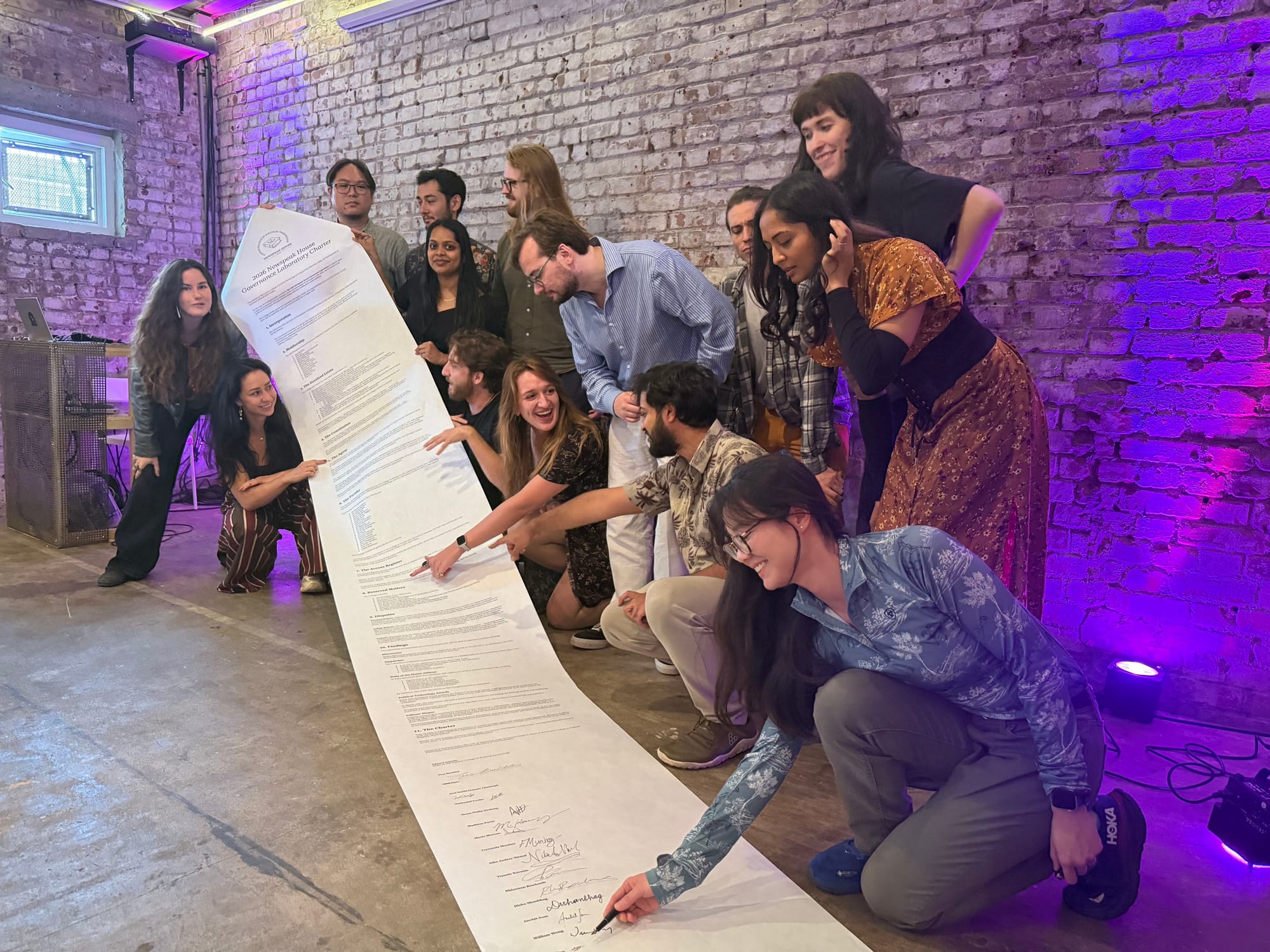
Our governance laboratory officially kicked off last month, the weekend of Sept. 18-20, with a two-day convention at Newspeak Hall where fellowship candidates arrived and met each other and faculty for the first time. After we signed a hilariously long physical charter scroll, we got to constitutional drafting.
Before the weekend, we each drafted 1000-word constitutional proposals and manifestos to bring as a starting point, prompted by Ed. The idea was that we’d then bring it to Saturday to share briefly and participate in a merge tournament — a bracket-style process that Ed created for us to negotiate individual texts to sum up to a final working text that more or less has a nash equilibrium of fellowship candidates' preferences for the constitution draft. That almost worked.
By the end of Saturday, we had two final versions of the constitutional text—one a 21-page document and another a seven-page document. Exhausted and eager to get on with the Fellows’ dinner that night, we unanimously moved to hold the two versions to resume Sunday morning.
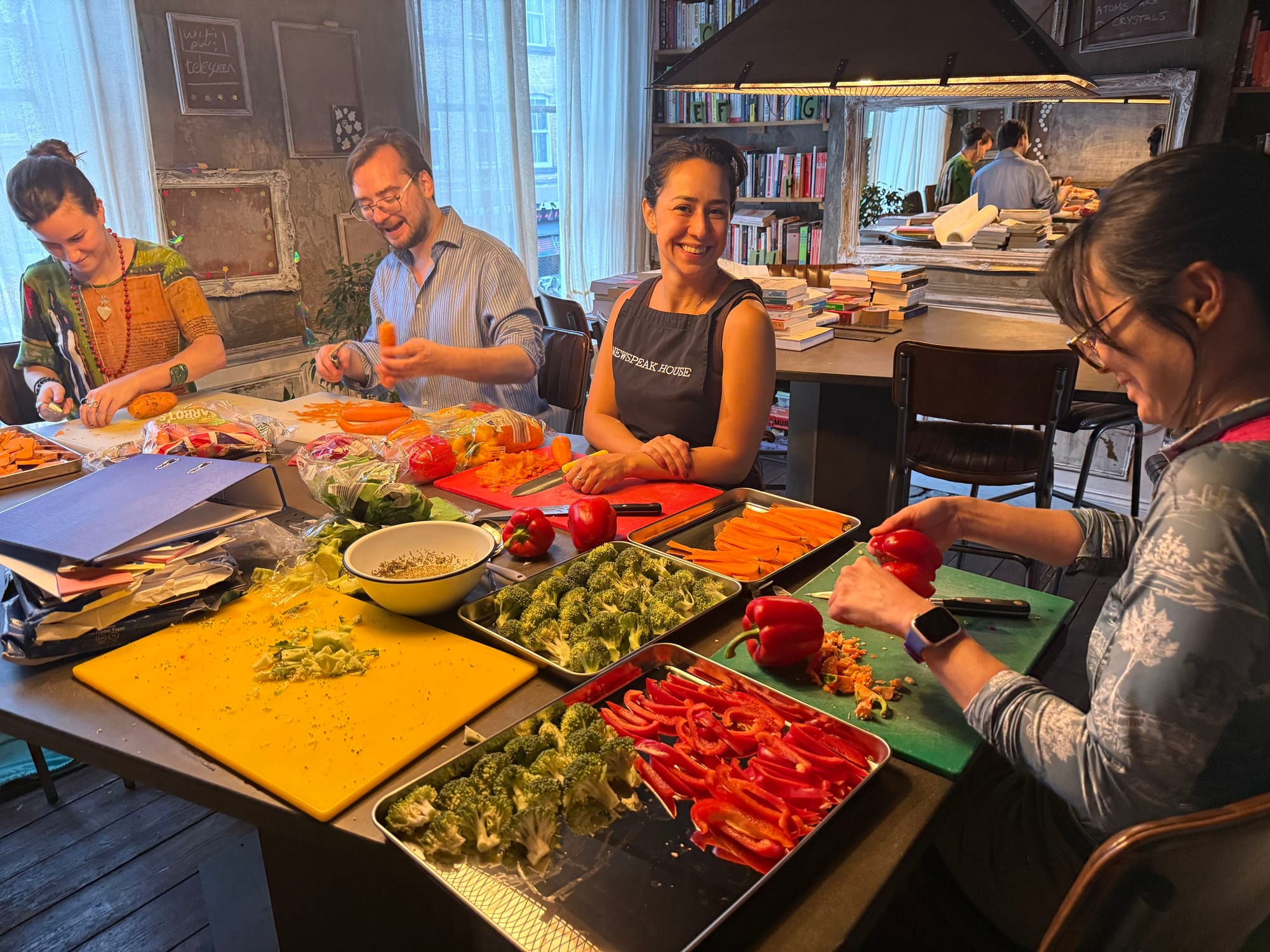
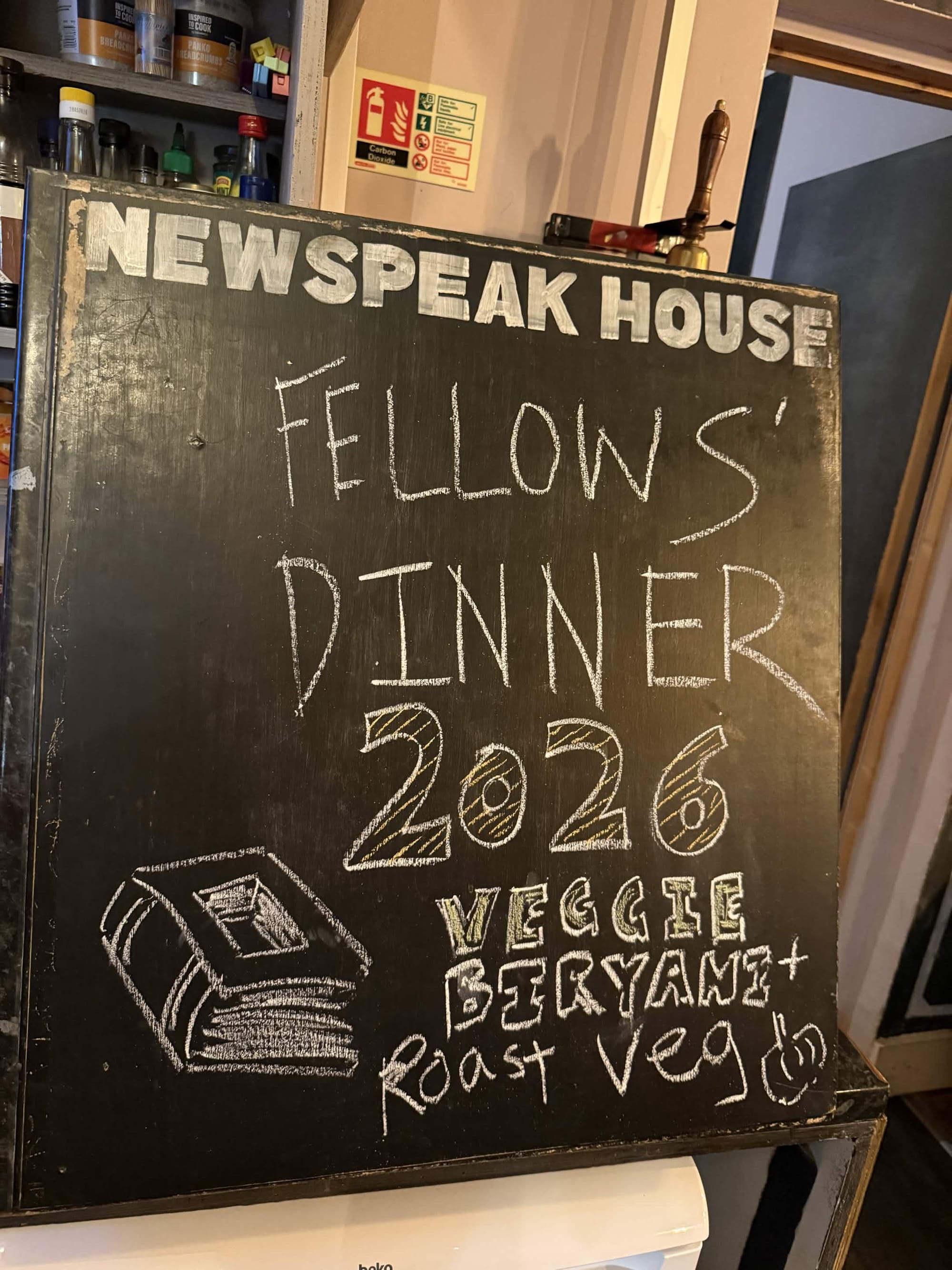
(As a quick sidebar: The last leg of deliberations by a few cohort members gave others time to plan a delicious AND economical vegetable biryani for the Fellows’ Dinner that night. We only spent GBP 31.68 to feed nearly 50 people!)
Back to Sunday morning: we were to confront our two remaining texts, and needed to select one to proceed with for our unconference for amendment deliberation the rest of the day – with a deadline of 5 p.m. that day to have a working constitution.
Ed gave us 15 minutes to pick one of the two texts, or generate a new one, to work with for the day. Faced with our first moment to make a crucial decision without a real, agreed-upon process to guide us, we managed to vote in 12 minutes to go with the 7-page version.
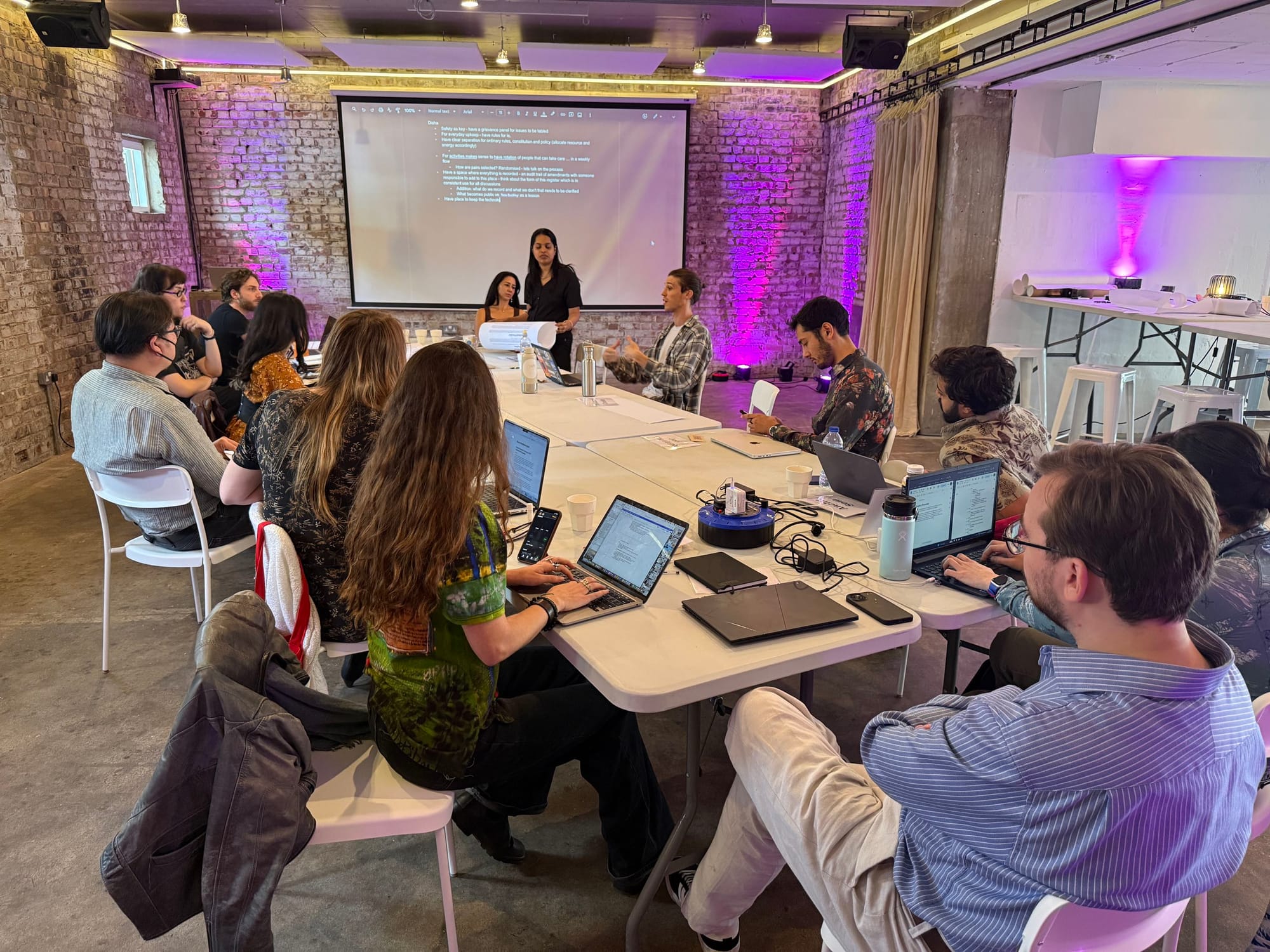
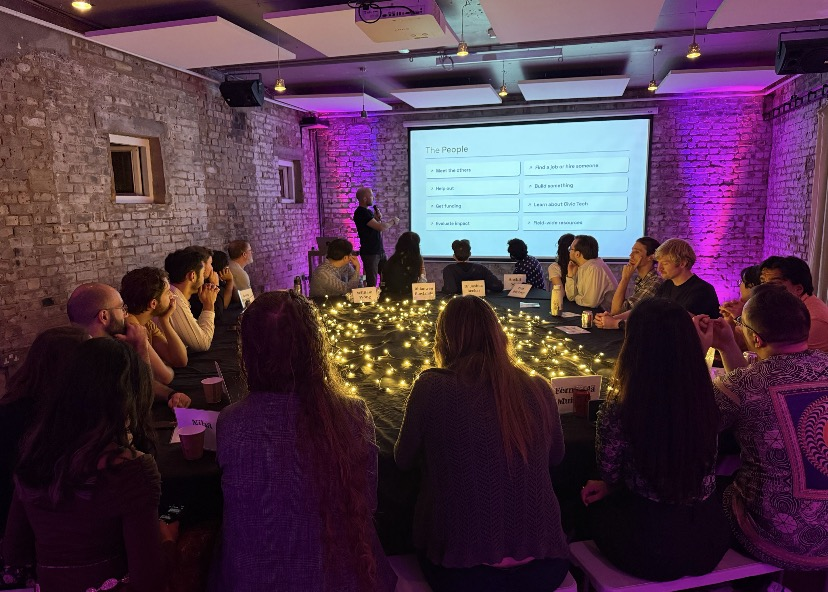
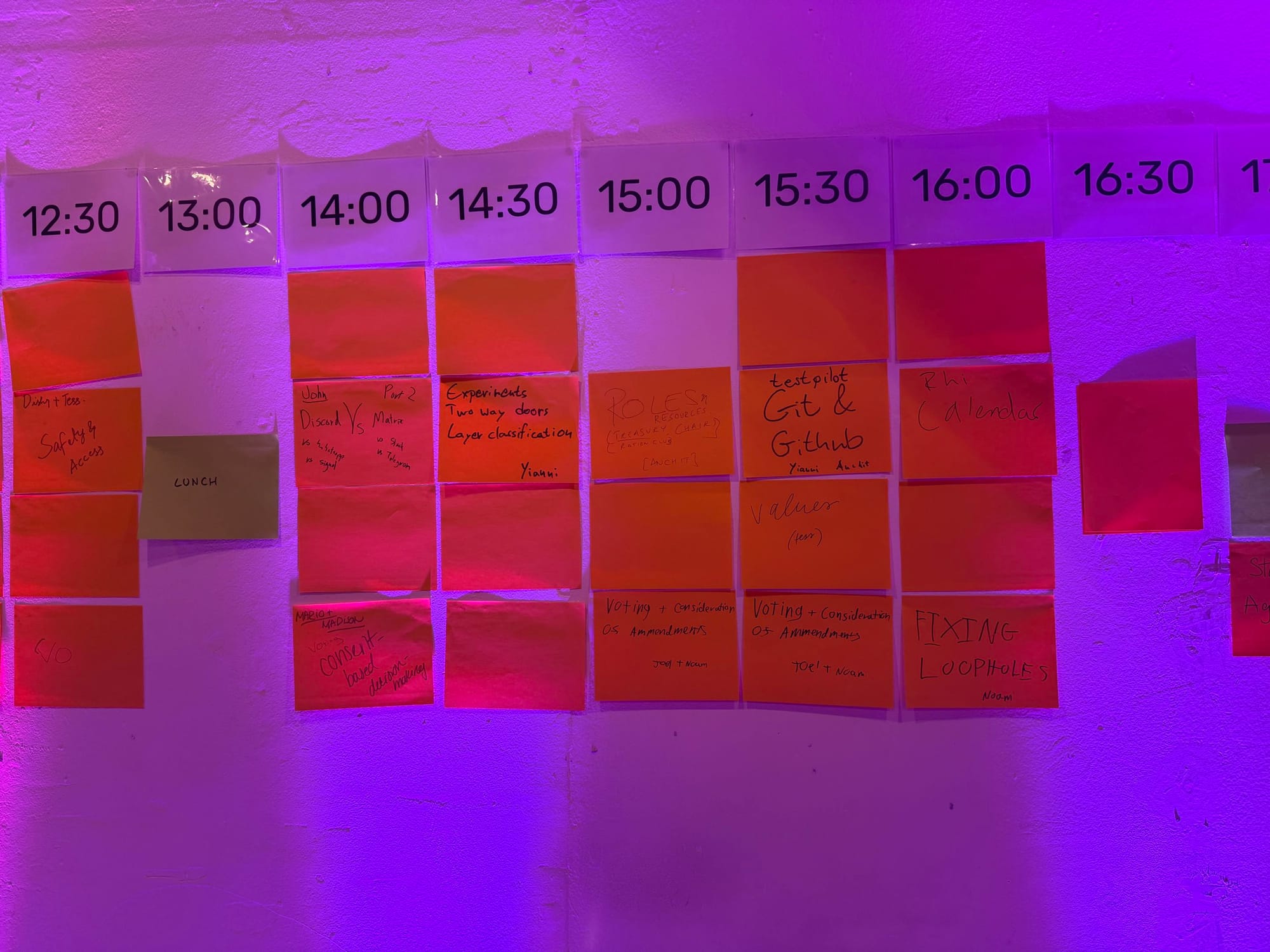
From there, the amendments unconference was where we started to hit a stride, and feel out our rhythm for the first time as a cohort. Members of the laboratory immediately started proposing unconference sessions on roles, communication methods, values and more.
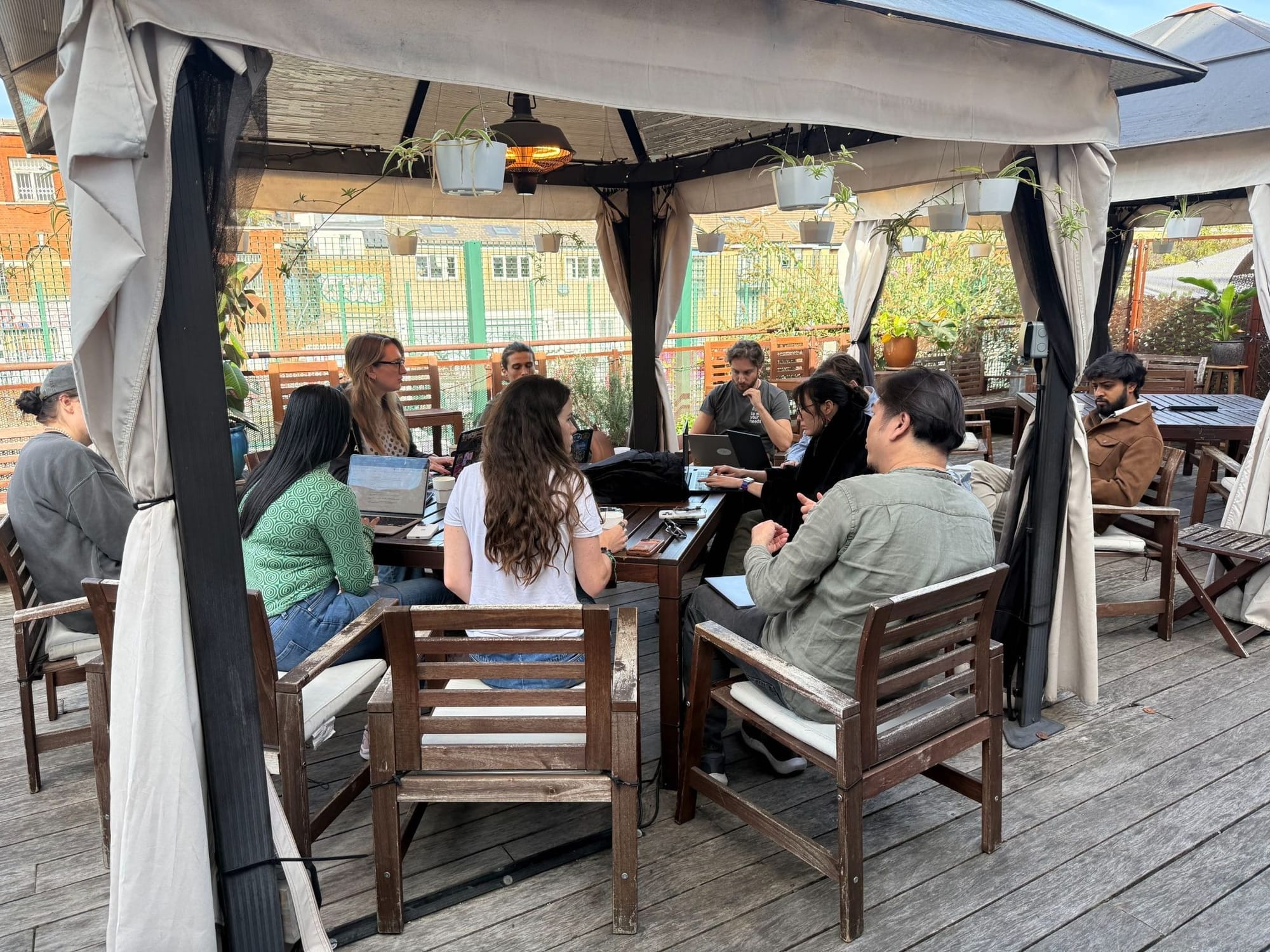
For some, it was a learning experience on what constitutional vs. policy rules are. Throughout the day, we split into various deliberation sessions, and used Ed’s docs.vote software to propose amendments and pass them to the constitutional draft text. It was truly a race against the clock, and against our own stamina as the hours wore on.
We made progress by triaging areas of the constitution based on members’ strengths and personal convictions—some members focused on consent vs. consensus voting, others on closing loopholes in the text, and others on deciding ‘launch’ plans for technical infrastructure. As consensus emerged around certain ideas, the harder part was translating them into specific-yet-simple enough writing that everyone felt comfortable with.
By the deadline Sunday afternoon, we did, in fact, move from 14 strangers in a room to one bound by a ridiculously large physical charter and maybe-not-yet-completely-understood, but existing and ratified constitution that bound us together within docs.vote.
Starting end of day Sunday, we gave ourselves an ‘expedite’ period for the two weeks following constitution ratification to make any constitutional amendments more swiftly. (Yet one immediate oversight was that we missed designating a process to create an agent, which we had to manage in the days that followed.)
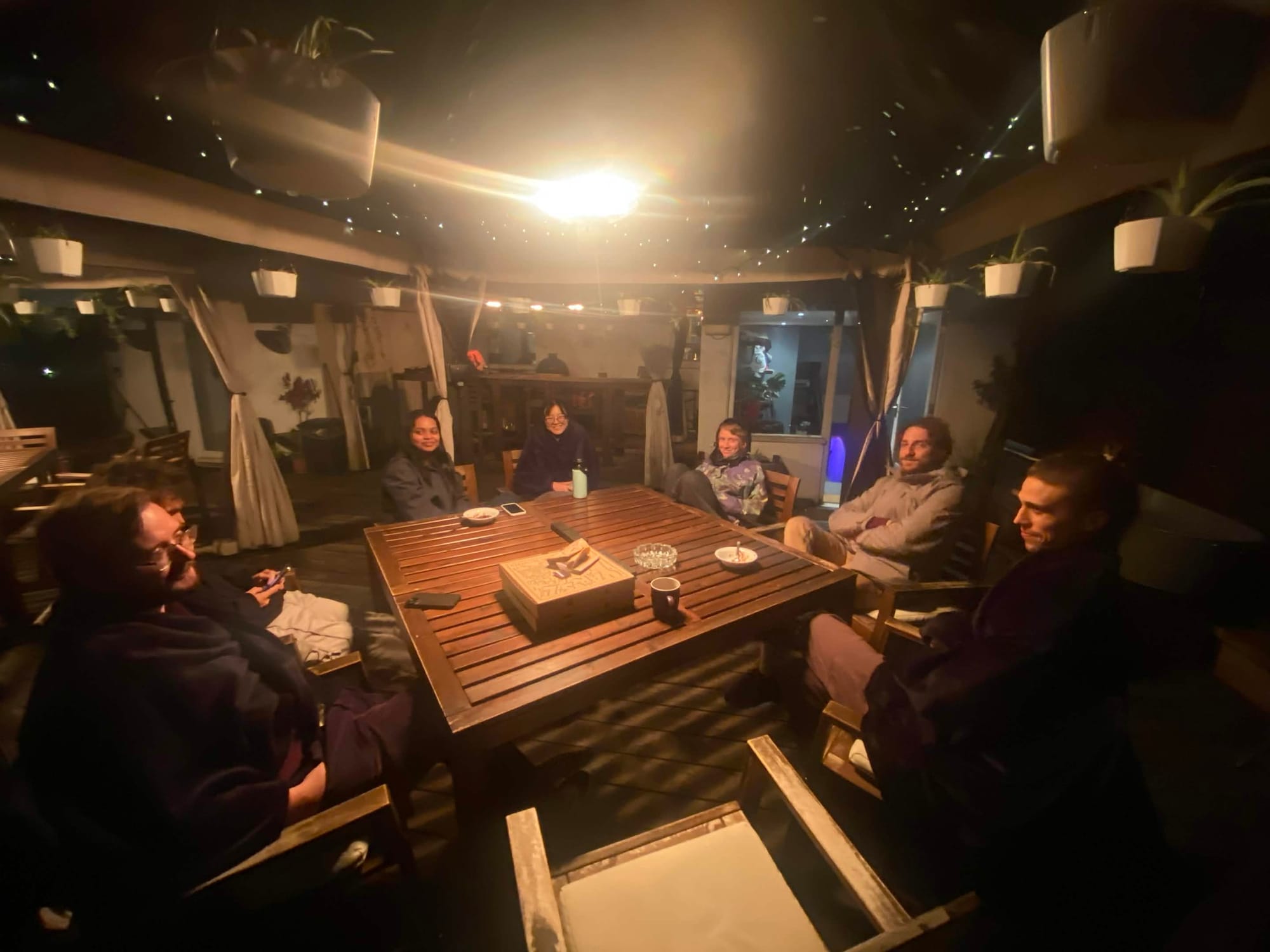
By the end of the weekend, we felt a sense of accomplishment, but also a very immediate realization that this was only the start. As one cohort member put it, “I was hit with the fact that this was just the beginning! There were still (and still are) lots of policy areas and processes we’re sorting out.”
If a future laboratory takes on a convention, our advice would be:
- Decide when you will next meet again to follow up on loose ends. Making policy and deciding on process and infrastructure has since been delayed in a way that could have been avoided if we'd all committed to a date/time that first weekend.
and
- Embrace the event as it’s designed to challenge you as a cohort. The time constraints are a feature, not a bug. It’s not about “winning” as individuals but about creating a system that will be viable until the cohort decides to amend the constitution. Don’t let the perfect be the enemy of the good!
If you’d like to see the living document of the constitution now, you can find it on our GitHub.
Laboratory updates
Moving on, here’s what we’ve accomplished since the convention.
Booking System, Newsletter & Policy
Over the past few weeks, we have adapted two open-source tools as infrastructure for the cohort, the booking system and this newsletter, and both times the software was ready long before we knew how we wanted to use it.
LibreBooking came with credits, quotas, approvals, and reservation rules that went far beyond what we had agreed to.
The newsletter stalled for longer than expected, because building it and deciding how it should run were bundled into a single proposal, so neither could move until the other did. In the end we separated creation from policy, which leaves you in the odd position of owning something that works and that nobody is yet allowed to use.
We hadn't expected how much these open-source tools would shape the policy itself. LibreBooking already thinks in credits, quotas and reservations, so our booking rules ended up written in those terms.
Ghost, which runs this newsletter and site content management system, came with its own assumptions about drafts, themes and who can see what. Between them, the conversation moved away from designing new custom software towards agreeing how we wanted to work together to produce it, with the software carrying some of that thinking for us.
None of this is fixed. We recently compared how many logins we have collected across these systems, and realized that because every piece is open source, a single sign-on tying them together is within reach.
There is already talk about a common AI agent for the house. Maybe the next step is to create MCP for all services so that no one has to leave their chat screen at all. Exciting times!
Server setup
We now have our own server, owned by the house, and it hosts this newsletter, the booking system, and the digital library. One person maintains the machine. Anyone else can build on it: put a project in a GitHub repository, connect it once, and every change merged after that deploys to the server automatically, with no shell access needed.
That makes it a piece of infrastructure we own and can all build on, and the library has already shown how quickly an idea can go from a repository to a live page. We are also working out a GPU rig for the lab so we can let some agents loose. Exciting times, for sure.
Safety Policy
One of the centerpieces of our unconference discussions and constitutional debates was the importance of safety and wellbeing here at Newspeak House. We all agreed on making folks feel welcome and comfortable here. The policy is now in the third round of edits and is hoped to be finalized by next week.
Coworking for Faculty and Cohort Members
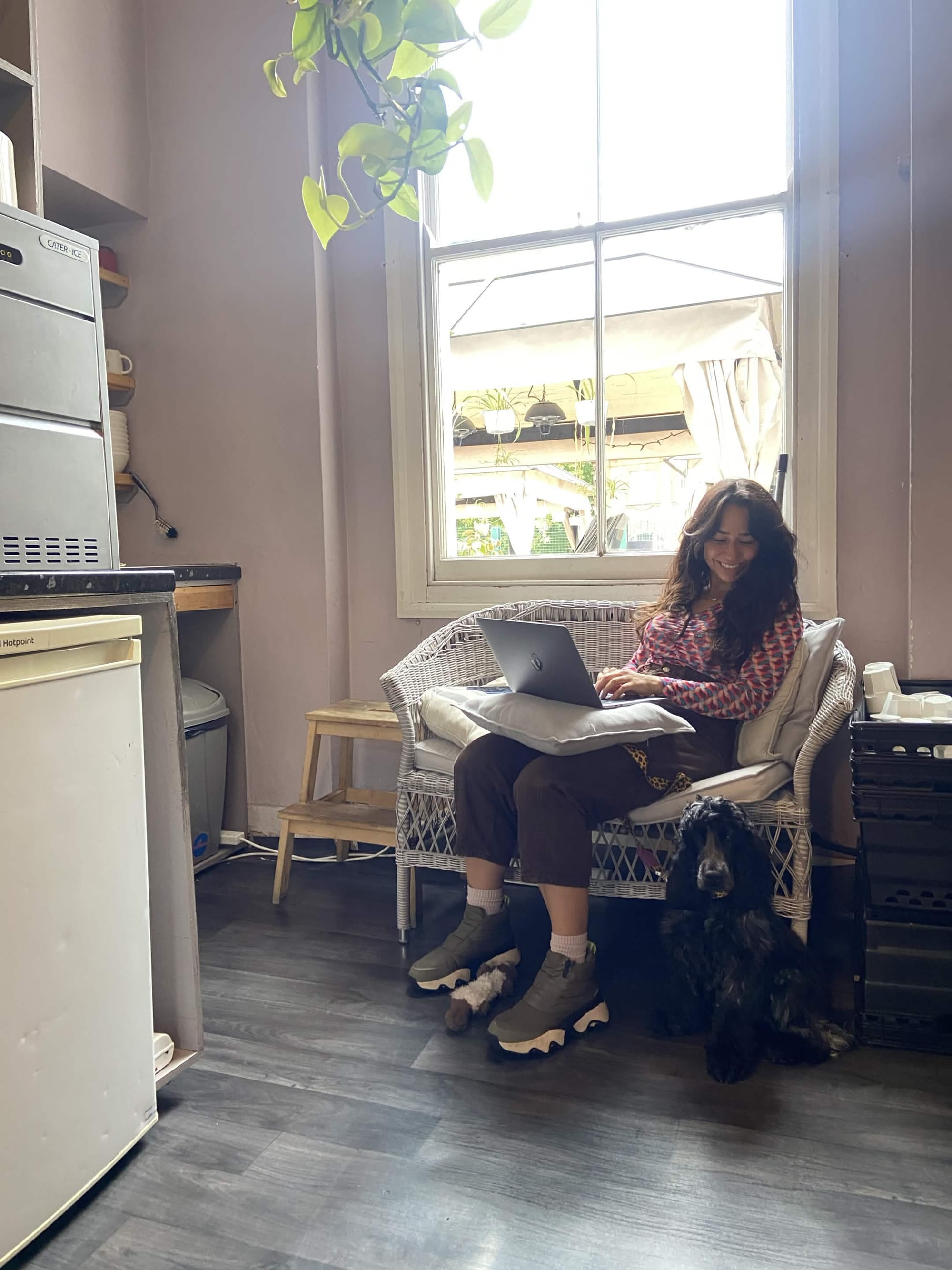
We’ve got a co-working day for faculty and cohort members going on — come work with us in the Newspeak House Library on Mondays! We would love to hang :) These weekly informal coworking days have led to great catch-ups and chats about research, infrastructure, and flows at the college.
We usually kick off around 9:30 a.m. and wrap by 5:30 p.m., with some hangouts afterward. No pressure or sign-up, just show up for as much or as little of the day as you’d like.
Guest Package
We have already welcomed a few cousins, friends, and colleagues to our guest room.
It’s so good to have this space to share; we’ve now made a little package so our visitors can settle in smoothly.
It covers essentials (Wi-Fi, keys, emergency contacts, etc.), how the house works (which fridges are fair game, washing, leaving checklist, etc.), and, most importantly, how to join in, including events in the hall and ration club Wednesdays.
We’ve also added a short list of local favorites from Brick Lane vintage to Columbia Road Flower Market to a roast at The Marksman. If you have any to include, let us know by emailing newspeakhouse26@gmail.com.
Exploring Topics & Scheduling sessions
We have been using topic.forum to gather ideas for topics to discuss with faculty, and there are now more than 154 topics!
The cohort has spent a good amount of time reading through those and “hearting” or commenting on topics of particular interest to each of us. As of October 11, we’ve sloshed more than 720 hearts, with an average of ~51 hearted topics per candidate and nearly every single topic receiving interest.
We’ve scheduled our first lecture, ‘Cut-Through: Getting Things in Front of Busy People’, for the end of this week – HOORAY! The session is open to fellows and faculty, too, so if you’d like to come, sign up here.
Ironically, some of us will be busy then, which will force us to figure out an offline system for our session material. At least a couple of us couldn’t resist mapping the topics using graphs, semantic embedding, and clustering, so take a look here and here if you’d like to see which directions we’re being pulled in.
Three Ration Clubs complete
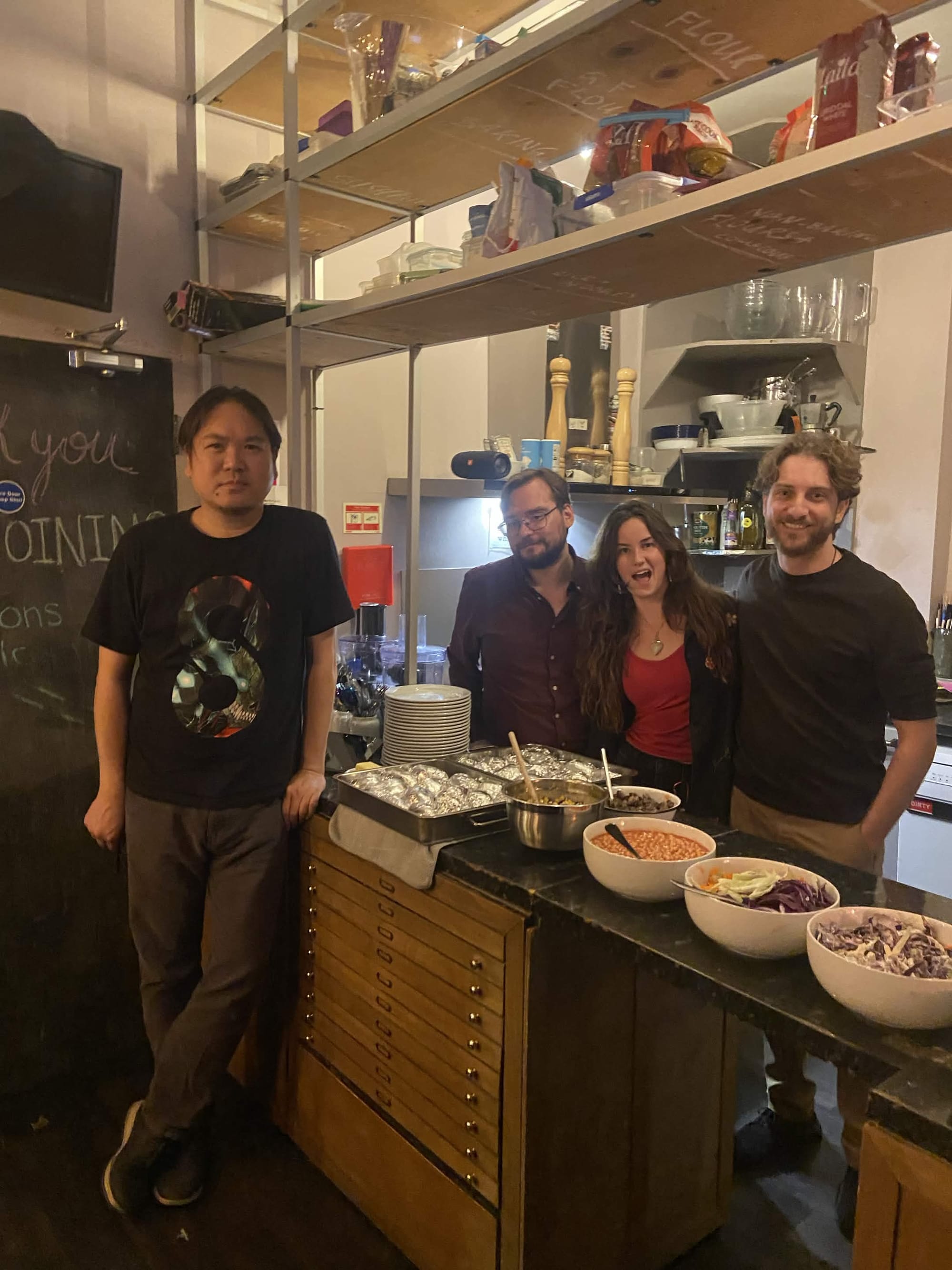
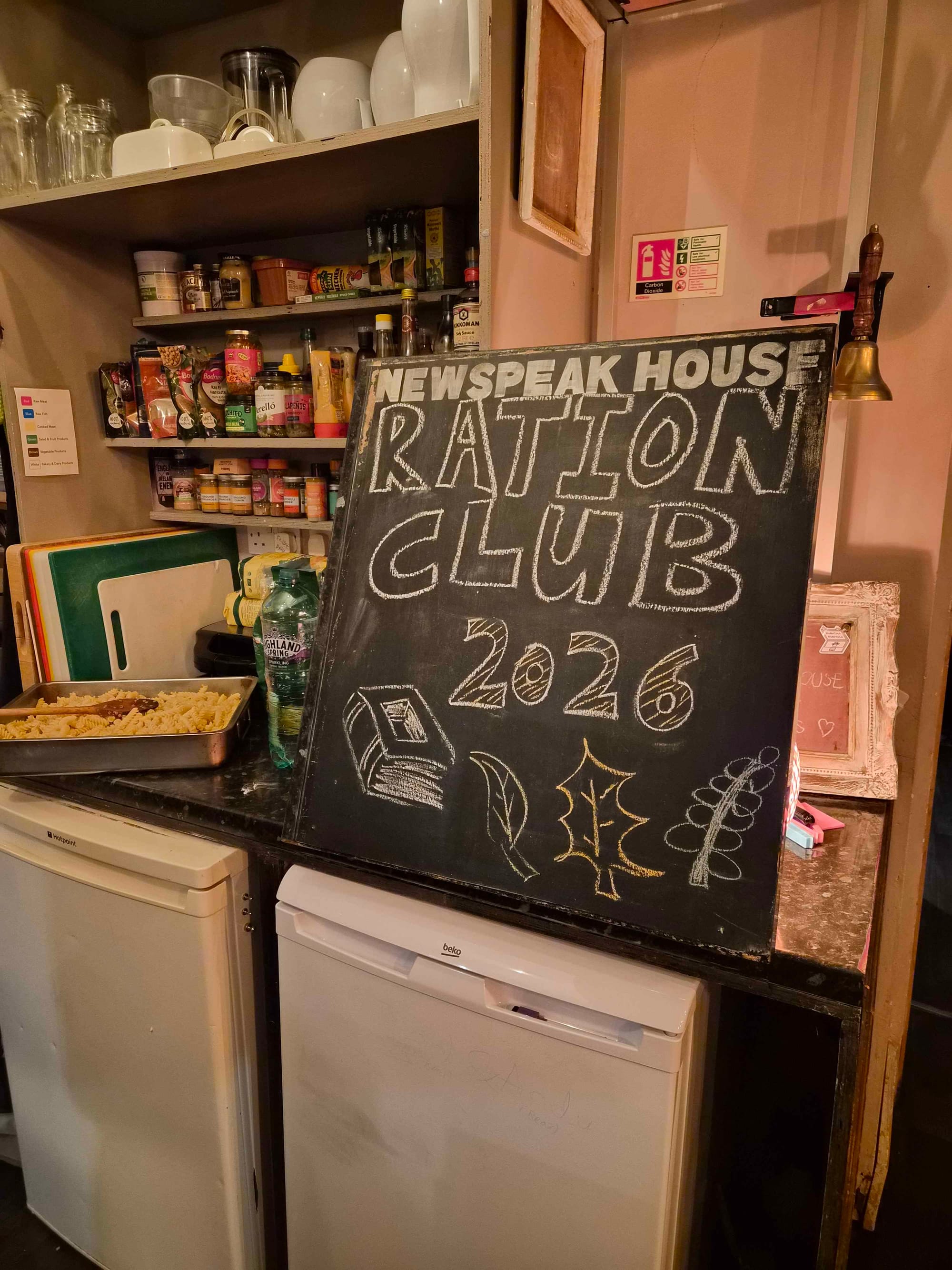
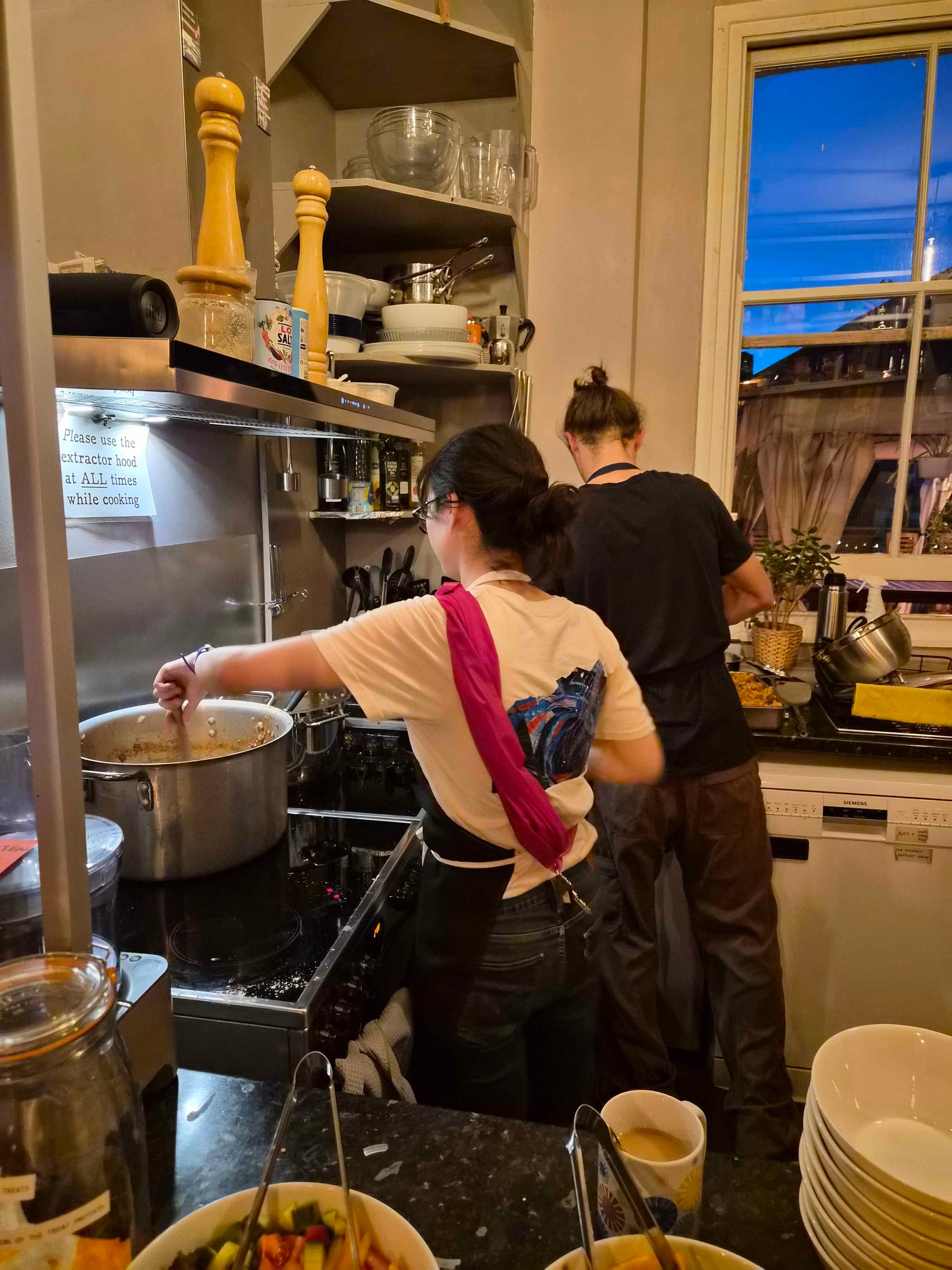
Cooking and coordinating a dinner for 30-50 people has brought us closer and helped us appreciate the importance of social infrastructure. We love commensality!
We have cooked up three meals so far and are discussing authoring a cookbook for future cohorts to reference, and maybe create a version with recipes that could be used by local food banks. These included a pasta bake, chili rice, and a baked potato bar.
See you for our next meal tonight!
Library
People have organically started borrowing some books from our collection or discussing some new hot books of interest.
We’ve compared the current list of books (using Optical Character Recognition on pictures of our bookshelves) with the list from last year, and it’s drastically changed: lots of books gone and lots of new ones.
We put the new list on our server, with the collection publicly browsable on the library page.
Currently, anyone on the access register can borrow books (for themselves or for friends). The goal of our digital library is to make it easier to find books, check their status, and rate, comment on, save, and add them.
The library retrieves metadata from OpenLibrary, but the coolest feature is the scanner: you can scan a book’s barcode to find or add it faster!
Finances
With our new treasurer role, we have developed a financial policy and are currently setting up a Fiscal Host through OpenCollective. A Fiscal Host is an established organisation that holds and administers funds on behalf of a group without its own legal entity, which allows us to receive and spend money without incorporating.
In practice, we will submit expenses through the platform with receipts, and both requests and payments will be publicly visible. The intention behind using a Fiscal Host is to engage and experiment with grassroots movements and alternative forms of technology even in the day-to-day management of the Laboratory.
Fellowship candidate updates
And finally, a few words from a few fellowship candidates about what’s going on in their worlds that they wanted to share.
Tess Buckley
I continue to orbit around a few core questions: how do we organise, how do we empower, how do we sustain, and how do we reimagine our futures and relation to each other? (And what role do music, art and stories play in all of it?)
This week’s work is a continued attempt to answer them, treating music as infrastructure for movements amongst other things. I came out of a two-day Deeply Human Summit in Paris with a real action item (lush!): Mingzhu He and I ran the three-session track on public movements and collective action, and from it I’m now developing a site (with friends) to help people working on hopeful futures of care find each other. I’m also writing a piece for Tania Duarte/We&AI on music as protest and its role in past (and potentially future!!) public movements.
This week I’m pushing to record the song I shared to close the two days, a bit of an anthem, set to be produced by Walter Werzowa, who was in the audience, so he offered to help out. In this vein, I’m keen to book my first songwriting session for musicians to imagine the future and AI, ideally in November, most likely on the terrace and/or in the lecture room at Newspeak House.
Alongside that, I’m copy editing Remixter and building a page that visualises its data with ambient song, in conversation with Will Wright’s team, who are interested in the memory side of this.
After a good while in the works, “RAIM: Operationalising Trustworthy AI in Music Generation” is now published in IEEE Transactions on Technology and Society, and I’m thinking through next steps for it and its accompanying website. Finally, I’d love to connect more with faculty this coming week, so aiming to book more sessions. Please do reach out for a coffee, or come co-work at Newspeak House on Monday’s informal working day.
William Wong
Last week, I hosted another Vibe Coding Meaningful Games workshop, exploring how games can become a medium for storytelling, personal expression, and meaningful experiences.
We began with a fundamental question: What makes a game meaningful?
Using examples from Game Poems, we discussed how games communicate stories and ideas not only through written narratives but also through mechanics, interactions, and meanings players discover.
I also introduced a specification-driven approach to AI-assisted game development, moving beyond improvisational vibe coding to define creative intentions, develop minimum playable versions, and improve them through playtesting.
For future workshops, I hope to explore two useful frameworks:
- MDA Spec Framework — connecting mechanics, dynamics and player experience with specification-driven development.
- One-Page Game Design Document — a simple way to structure game ideas before implementation.
But meaningful game design doesn't have to begin with coding. Experimenting with mechanics, testing ideas, and observing players can start with just paper and imagination.
That's why I'll be hosting PaperJam! on Tuesday, 20 October, at Newspeak House, where we'll explore game design through hands-on paper prototyping.
Rhi
I’ve spent the past few weeks site mapping upcoming NHS, Welsh Government and Senedd meetings that bear on unfreezing Welsh gender services.
I have a prototype and am aiming to get a hosted version out this week. I hit a plateau with a project I’ve been running to scrape far-right Telegram channels, so I am now working on a wrap-up post pulling out lessons learned and what I got from the project.
I have also been working on a piece about Portishead and Hauntology that I’m aiming to put out on my blog next week.
At Newspeak House, I’ve been auditing the Library, and it’s been great seeing books I recognize and others I haven’t.
Anchit
I haven't been able to attend many events these past few weeks, but I have been reading from the house library, and there are several strands it's activated.
First is from Thomas Malone's Superminds, which I have been reading alongside a series about AI on The Rest Is Politics podcast. In that conversation, Rory Stewart described a world in which AI takes over jobs, people and profits thin out, and a few American corporations absorb the value.
That is a strong argument for sovereign AI, but sovereignty has a price, and he put it at around £500 billion for Britain. The figure seems to assume we must join an arms race to build the biggest and most general model. However, Malone's account of collective intelligence points the other way: groups grow smarter through the variety of the minds in them.
That makes me wonder whether the sovereign intelligence we need might come from a variety of smaller open models fine-tuned to work alongside people. This is the entire manifesto of Mistral, which recently launched an open weights model. I would love to hear from people who have used open models in ways that further these ideas; please reach out at anchitaxom@gmail.com.
Clara
Censoring a text about censorship
Last Wednesday, October 7, I ran a blackout poetry workshop at Newspeak House. Using black markers on printed pages, participants erased most of the words and kept what was left as poems. They also had the option to create digitally using a web-based tool.
A blacked-out page is also what censorship looks like. What differs is who holds the marker, and why. We had 25 source texts on the table, from Hobbes to Hansard (UK parliamentary proceedings), spanning 1651 to 2025. Among the texts was Ada Palmer's “Tools for Thinking About Censorship”, and (as intended) some brave soul censored it.
During the sharing segment, various approaches were on display – some amplified a source text, some worked against it, and some made deletions that transformed it. Several people said they were curious to read the original texts afterward, so blackout poetry may be a useful way of engaging with a text. Curation may be key – I had positive feedback on the selection of texts.
The slides, which include resources and links to the source texts, are available here.
More extensive reflections to follow on my Substack. I’m excited to build on this experience to create a series of workshops at Newspeak House!
The rise of “Claude Pop”
“Any sufficiently advanced technology is indistinguishable from magic.” – Arthur C. Clarke
If AI outputs range from pointless, uncanny slop to mathematical breakthroughs, where does “Claude Pop” sit on this continuum?
Inspired by self-referential, tongue-in-cheek Claude-made music videos such as the one about P(doom), I’ve been experimenting with making music videos using Claude. My shiny new Claude Pro plan is begging for mercy (I have to clear my context window more often!).
Claude writes the lyrics and draws every frame in code; Suno provides the music. My very first attempt, "It's Just a House", answers recent unsubstantiated Internet claims about Newspeak House by counting every entry in its public events calendar: 1,703 events, mostly tech and civic meetups. The song admits that events hosted at Newspeak House – or at least those legible to Claude through the public events calendar – lean left.
I also asked Claude for a music video about the making of Ed Saperia's video game Coven Rush. Unlike my other prompts which required Claude to create most of the images, Claude could draw on the assets that Ed had published on his making-of page. The end result was "No Game-Over Screen", sung from the perspective of the Claude agents that built Coven Rush. Ed called it “interestingly invasive”.
Claude’s ability to hand me a complete music video from a single prompt is impressive, especially since Claude can't hear the song it is animating.
I’m also working on metacognition with Claude: reflecting on how I use Claude, and thinking about inefficiencies and possible failure modes.
Coming up
14, October - Ration Club Join us for our weekly community dinner tonight at Newspeak House.
16, October - Cut-Through: Getting Things in Front of Busy People. Our first session with faculty as part of the Introduction to Political Technology course, hosted by faculty member Hannah O’Rourke.
16, October - Creative Tech event - a series of reverse pitches and landscape talks on funding for createch including UKRI, Arts Council England, BRAID, Abbey Road Studios and more hosted by Lab member Tess Buckley.
19, October - Answering Unanswerable Questions This workshop by faculty Sarah Meiklejohn invites us to come together as a community and explore how we might provide advice to others or want advice to be provided to us when posing questions that cannot be resolved rationally.
20, October - PaperJam! Game Jam Hosted by Lab member William Wong, PaperJam! is like a book club, but instead of a book we play a videogame, and as well as discussing it, we make paper prototypes inspired by it.
23, October - Insurance of AI: An interactive workshop session on AI insurance and incentivizing risk mitigation in industry hosted by Lab member Tess Buckley.
Last words
That’s all! Thanks for joining us for the first edition, and expect another Dispatch next week.
Best,
The Newspeak House Governance Laboratory
P.S. If you’re a faculty member and haven’t joined us on Discord yet, please get in touch for the link at newspeakhouse26@gmail.com.
Disclaimer: Views expressed in Dispatches are those of the individual contributors. They do not necessarily represent the views of Newspeak House, its faculty, or other fellowship candidates.